From January 2026, UK restrictions on advertising products high in fat, salt and sugar (HFSS) removed a significant slice of inventory for food and drink brands. On television the rules operate as a watershed — no advertising for less healthy food and drink between 5.30am and 9pm. Online, the restriction on paid advertising for those products is not a watershed at all: it is not time-limited. For much of FMCG, the question is no longer simply where to reach audiences, but where it is still possible to reach them with relevance at all.
A compliant route back to relevance
Out-of-home, including residential DOOH, sits outside the scope of the restrictions. That gives FMCG brands a compliant, brand-safe environment to reach affluent households — in the building, close to where food and shopping decisions are made. For categories squeezed out of their traditional channels, it reopens a route to the everyday relevance those channels used to provide.
Meeting the decision at the right moment
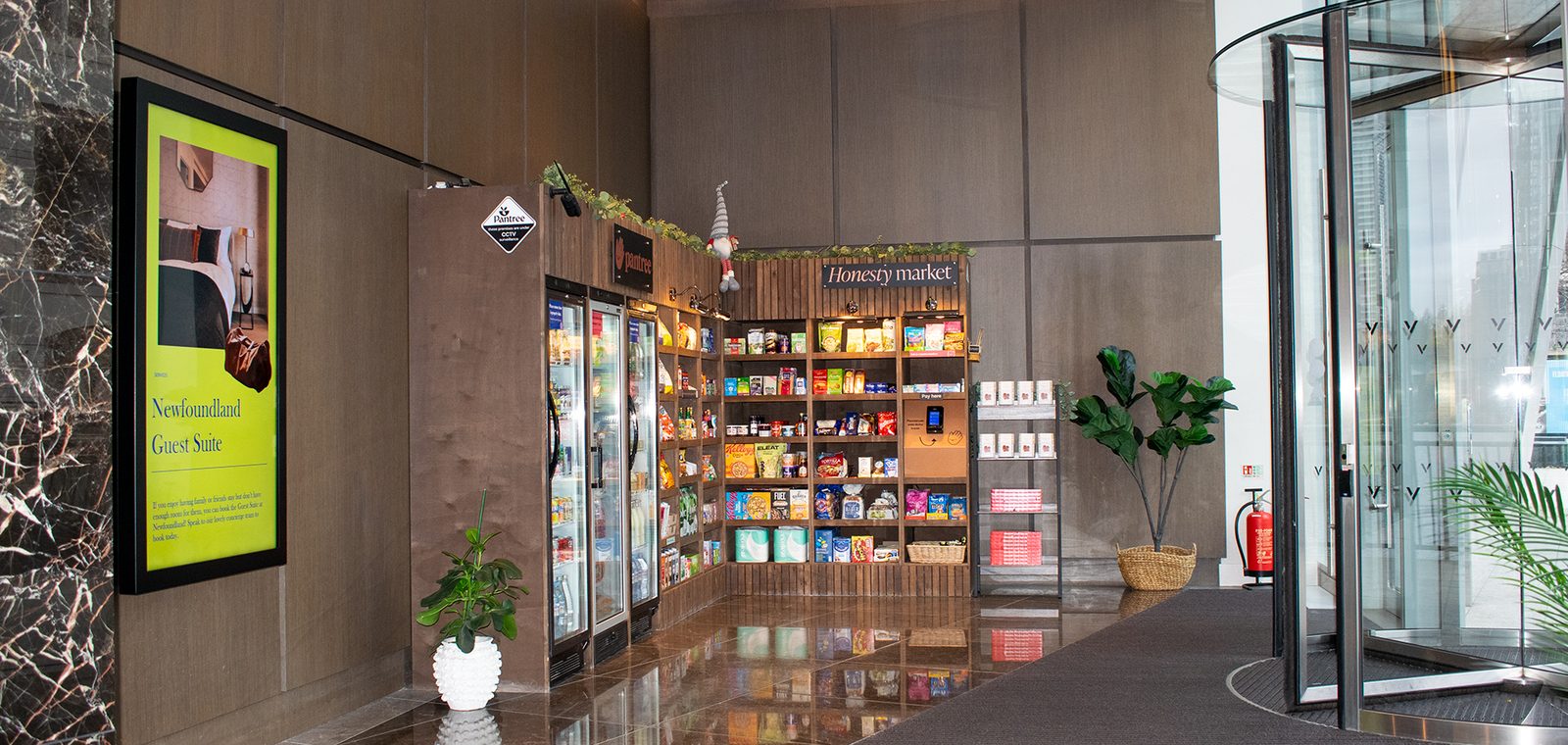
Mealtimes are a daily decision, and they are made close to home. Abode’s screens are not near the weekly shop in a general sense — they are a short walk from it.
Grocery on the doorstep
Abode network data, 24 July 2026. Grocery retail (supermarket, convenience store, greengrocer) from OpenStreetMap, measured as straight-line distance from each store to the nearest Abode panel in that development.
A timely, well-placed message in the lobby — caught on the way out to shop, or home to cook — meets the everyday what’s-for-dinner question head-on, at precisely the point a brand can still tip the decision.
When the rules change, relevance moves closer to home — quite literally.
Frequency that rebuilds presence
Residents encounter several messages a day on Abode screens as they commute, shop and unwind — a natural cadence that rebuilds the everyday presence HFSS rules stripped from other media. Combined with an affluent, premium-living audience and a trusted, low-clutter setting, it gives food and drink brands a way to stay visible, and stay relevant, in a tightening landscape.
Where this leaves FMCG planning
The restrictions are not a temporary disruption to plan around; they are the new shape of the market. The brands that adapt fastest will be the ones that stop asking which of the old channels can be salvaged and start asking where the audience still is at the moment of decision.
For FMCG marketers planning around the new restrictions, the opportunity is to think beyond the channels that have closed — and toward the one place the audience always returns to: home. If that is worth a closer look, start with who the residential audience actually is, or the FAQ for how campaigns are bought, targeted and measured.